USAA DriveSafe
- 3.8
- Rating
- 1.00M
- Installs
- Free
- Price

 Analysis by App-foxy
I approached USAA DriveSafe as a practical driving companion rather than as a general-purpose vehicle app. That distinction matters. It is an Auto & Vehicles app from USAA, and its availability is limited to select states, so the first decision is not whether the idea sounds useful; it is whether the service is available where you live and fits the way you already manage your driving.
For eligible users, the appeal is easy to understand: one focused tool connected to a familiar insurance provider, offered free of charge and rated for Everyone. I found that the best way to judge it is to look beyond the short store label and ask what kind of driver benefits from a dedicated USAA experience, what kind of driver would be better served by a broader alternative, and whether changing your routine is worth the effort.
What I would check before choosing it
My first checkpoint would be eligibility. The app is available in select states, which makes location more important here than with many ordinary driving utilities. I would check that before spending time setting it up. If you are outside the supported area, the app is not a practical choice no matter how attractive the concept may be.
You May Also Like

 Blood Strike: 2.5 Anniversary
Blood Strike’s Loadouts Turn Every Drop Into a Tactical Gamble
A close look at Blood Strike’s custom loadouts: how fast access to signature weapons reshapes its battle royale rhythm, rewards preparation, and narrows the gap between fights.

 Pandora - Music & Podcasts
Pandora’s Music Is Easy to Start, but Harder to Recover
Pandora’s strength is its low-effort path from a seed to a station. Its weak spot is how much confidence it asks you to place in connection, setup, and quiet recovery.

 8 Ball Pool
 Is Built on Rivalries, Rematches, and Routine
A close look at the rivalries, rematches, shared routines, and unanswered safety questions that turn a quick pool match into a persistent mobile community.

 Samsung Music
’s Quiet Strength Is Playing What You Already Own
Its reach comes less from spectacle than from dependable access to a personal library. That simplicity is both the app’s strongest retention engine and its ceiling.

 AccuWeather: Weather Radar
AccuWeather Review: A Quick, Clear Forecast for Everyday Decisions
For everyday plans, the best forecast is the one you can understand quickly. AccuWeather makes rain timing, radar, and local conditions easy to act on, with a few trade-offs.

 Hill Climb Racing
Why Hill Climb Racing Still Turns Crashes Into One More Run
A tiny car, a bumpy hill and one more upgrade: Hill Climb Racing keeps resurfacing because its simple chaos makes every near-miss feel personal.
More From Our News Desk



The next question is your relationship with USAA. This is not a neutral, standalone driving tool from an independent navigation or vehicle-maintenance company. The developer is USAA, and that shapes the experience. If you already use USAA for your vehicle-related needs, keeping a driving-focused service in the same ecosystem may feel simpler. If you do not, the reason to choose it becomes much narrower.
I would also decide what I actually want from a driving app. Someone looking for maps, live traffic, fuel prices, parking, repair reminders, or a broad dashboard should not assume that a focused service will replace all of those tools. The short description is simply “USAA DriveSafe,” so I would treat it as a dedicated USAA driving product, not as a promise of an all-in-one automotive suite.
That is an important distinction when comparing categories. Navigation apps are built around getting somewhere. Maintenance apps are built around remembering service and expenses. Driving-behavior tools are built around helping people understand or improve how they drive. A person may use more than one category, but switching to this app should solve a specific problem rather than create another icon with no clear purpose.
How I would judge the setup
My practical test would be whether I can understand the app’s purpose quickly, complete the initial setup without guesswork, and use it without changing every part of my routine. A driving tool has to fit around real life: commuting, school drop-offs, errands, and occasional long trips. If it demands constant attention, it defeats the point of safer, calmer driving.
I would prepare before the first drive rather than configure it while leaving a parking space. I would review the available settings, make sure the app is ready for the type of driving I normally do, and then give it several ordinary trips instead of judging it from a single short journey. That approach separates genuine usefulness from the novelty of opening a new app.
There is also a privacy and attention trade-off that deserves a thoughtful decision. Any driving-focused service can affect how comfortable you feel about sharing driving-related information or allowing an app to operate as part of your routine. I would read the in-app explanations and permissions carefully, then decide whether the value is worth that exchange. I would never configure it while moving, and I would keep the phone out of my hand once the car is in motion.
What the current app profile tells me
The Android listing shows a 4.0 average from around 55 thousand ratings, with more than 1 million installs. That gives me a useful signal: the app has reached a substantial audience, but the rating also suggests it will not be a perfect fit for everyone. I read that combination as “worth investigating,” not as a guarantee that every driver will enjoy the experience.
It is free to download, carries an Everyone age rating, and the current version is 3.17.0.134896. The app was released on January 23, 2019, so it is not a brand-new experiment. At the same time, an established release date does not automatically mean that every part of the experience will feel modern or equally polished on every device.
The listing also shows around 12 thousand written reviews. I would use those comments to look for patterns rather than isolated complaints or praise. In particular, I would pay attention to remarks about setup, day-to-day reliability, state availability, and how well the app fits with a user’s existing USAA relationship. Those are more useful decision points than a single enthusiastic review.
Where USAA DriveSafe makes the strongest case
The clearest strength is focus. Instead of asking a general navigation app to become a driving-behavior tool, this product is built around the USAA DriveSafe concept. For an eligible USAA customer, that focus can make the experience easier to understand than assembling separate services from unrelated companies.
I also like the possibility of continuity. When a driving tool comes from the same organization a user already trusts for vehicle-related matters, there is less mental switching between brands and accounts. That does not make every workflow automatically better, but it can reduce the friction of remembering which app handles which part of the driving experience.
A realistic example is a commuter who drives the same route most weekdays but wants to become more deliberate behind the wheel. Rather than searching for a new navigation app every morning, that person could make the driving-focused tool part of a consistent routine: prepare before leaving, drive without interacting with the phone, and review the experience only after parking. The value comes from consistency, not from opening it once and expecting an instant transformation.
Another useful scenario is a household in which one person manages the vehicle-related account while several people use the car. A dedicated USAA app may be easier to keep in the same family workflow than a collection of unrelated tools. I would still clarify who is expected to use it and when, because a shared vehicle can make driving records or app routines less straightforward than they are for a single driver.
Small habits that improve the experience
My first practical tip is to establish a baseline. Use the app during normal driving before trying to change your behavior. If you immediately alter your routes, driving times, or habits, you will not know whether the app fits your everyday life or whether you are reacting to the process of being evaluated.
My second tip is to review only when parked. Even if the app is designed to support safer driving, checking a notification, score, or trip detail while stopped at a traffic light is still a distraction. I would wait until the car is safely parked, then look for patterns across several trips instead of obsessing over one unusual journey.
My third tip is to separate controllable habits from circumstances. Traffic, road design, weather, passengers, and emergency situations can affect a drive. If the app presents information about driving behavior, I would treat it as feedback rather than a complete verdict on my ability. The most useful response is to identify a repeatable habit I can improve, not to chase a flawless result on every trip.
A fourth insight is that the app is likely to be more valuable for a driver who wants a structured routine than for someone who only wants occasional vehicle information. If you already know that you will ignore another daily check-in, the free price does not make it useful. The real cost is attention and consistency.
Why the focused design can be better than a crowded dashboard
Many automotive apps try to cover everything: navigation, fuel, maintenance, roadside help, parking, insurance, and vehicle information. That breadth can be convenient, but it can also bury the one feature a driver actually needs. A focused USAA experience may be preferable when the goal is simply to build a more disciplined driving routine without managing a large collection of unrelated tools.
I would especially favor this approach for someone who dislikes complicated interfaces. A narrow purpose can make an app easier to return to, provided the available state and account requirements line up. In contrast, a driver who wants one screen for every vehicle task may find a broad automotive platform more satisfying, even if it is less specialized.
The free price also lowers the financial risk of trying it. I can install it without committing to a subscription, test it during ordinary trips, and decide whether it earns a permanent place on my phone. That does not remove the need to consider privacy, availability, or setup effort, but it makes experimentation more reasonable.
Where another category may fit better
I would not choose this app as my primary navigation solution. If my main need were turn-by-turn directions, live traffic, route planning, or finding a nearby business, I would use a navigation app designed around those tasks. A driving-focused USAA tool and a map application can complement each other, but I would not expect one to replace the other.
I would also look elsewhere if my priority were vehicle maintenance. A maintenance tracker is usually the better category for recording oil changes, tire work, registration reminders, repair costs, and service history. USAA DriveSafe may make sense beside that kind of app, but it is not sensible to download it expecting a complete digital service log.
Likewise, a driver who wants fuel-price comparisons, parking discovery, or detailed trip budgeting should compare tools built specifically for those jobs. The usual alternative is not always one rival app; sometimes it is a small combination of specialized apps. That combination can be more capable, but it also means more accounts, more notifications, and more places to manage information.
There is a trade-off between integration and independence. A USAA-centered product may feel natural to an existing customer, while an independent app may be more attractive to someone who changes insurers, manages several vehicles across different households, or wants a service that is not tied to one provider. I would choose based on which relationship matters more: convenience inside an existing ecosystem or flexibility across providers.
Situations in which I would skip it
I would skip it if I lived outside the supported states, because availability is a basic requirement rather than a minor inconvenience. I would also skip it if I wanted a universal tool that worked equally well for every driver, vehicle, and insurance arrangement without any connection to USAA.
I would be cautious if I rarely drive. For an occasional driver, a dedicated driving routine may not provide enough value to justify another setup process. The same applies to someone who already has a trusted tool for the exact behavior or trip information they want and has no interest in changing that routine.
I would also avoid using it as a substitute for attentive driving. No app can make it safe to interact with a phone on the road. If the presence of driving feedback makes you stare at the screen, adjust settings mid-trip, or worry about every moment behind the wheel, the app is working against its intended purpose for you.
Finally, I would not switch merely because the download is free. Free tools still consume storage, attention, and time. I would install it only when I can name the problem it is meant to solve and explain how I will judge whether it helped after a fair trial.
What switching really costs
The obvious cost is not money, since the app is free. The less obvious cost is changing behavior. I would need to learn the interface, establish a routine, understand what the app is asking me to do, and decide how to interpret its feedback. That is manageable, but it is still a commitment.
There may also be a transition period if I am replacing another driving tool. I would avoid deleting the old app immediately. First, I would keep the existing navigation or maintenance tools that serve different purposes, then test whether USAA DriveSafe handles the specific job I care about. Removing a useful alternative too soon can turn a simple trial into an unnecessary disruption.
For a family, the cost of switching includes agreement. Everyone who drives the vehicle should understand the routine, especially if the phone or vehicle is shared. A tool that works for one person may become confusing when another driver uses the car without knowing what has been configured. Clear expectations are more useful than assuming the app will solve household coordination by itself.
I would give the trial enough time to cover different kinds of trips: a normal commute, a busy errand, and a longer drive. I would not invent a precise pass-or-fail deadline, because the right test depends on how often someone drives. The important point is to compare it with the old routine honestly: Is it easier to maintain, does it provide feedback I can act on, and does it fit without distracting me?
If the answer is no, switching back is not a failure. It may simply mean that my needs belong to another category. A navigation app, a maintenance log, or a broader insurance application may be a better center for my vehicle-related tasks. The best choice is the one I will use correctly and consistently.
My recommendation for the right driver
I recommend trying USAA DriveSafe when three conditions line up: you are in a supported state, you are comfortable with a USAA-centered experience, and you want a focused way to make driving behavior part of your regular routine. The free price makes a careful trial easy, while the established app presence and 4.0 average indicate that it is a serious product rather than an obscure experiment.
I would recommend it most strongly to an eligible USAA customer who wants structure without building a complicated collection of automotive apps. It can make sense for a commuter, a driver working on steadier habits, or a household that prefers to keep vehicle-related services together. The key is to use it as a calm, after-the-drive feedback tool rather than as something that demands attention in traffic.
I would not recommend it as a universal replacement for maps, maintenance tracking, fuel tools, or every other vehicle service. Drivers with those priorities should choose the category that directly matches the task. I would also tell anyone outside the supported states to look at alternatives instead of forcing a product that cannot fit their situation.
My final view is positive but selective. USAA DriveSafe is most convincing when its focused purpose and USAA connection simplify an existing routine. It is less convincing when a driver wants broad automotive coverage, provider independence, or minimal involvement after installation. If you know which of those two groups describes you, the decision is fairly clear: try it carefully if it matches your driving goal, and skip it without hesitation if you are really looking for a different kind of app.
FAQs for USAA DriveSafe
01What is USAA DriveSafe and how does it work?
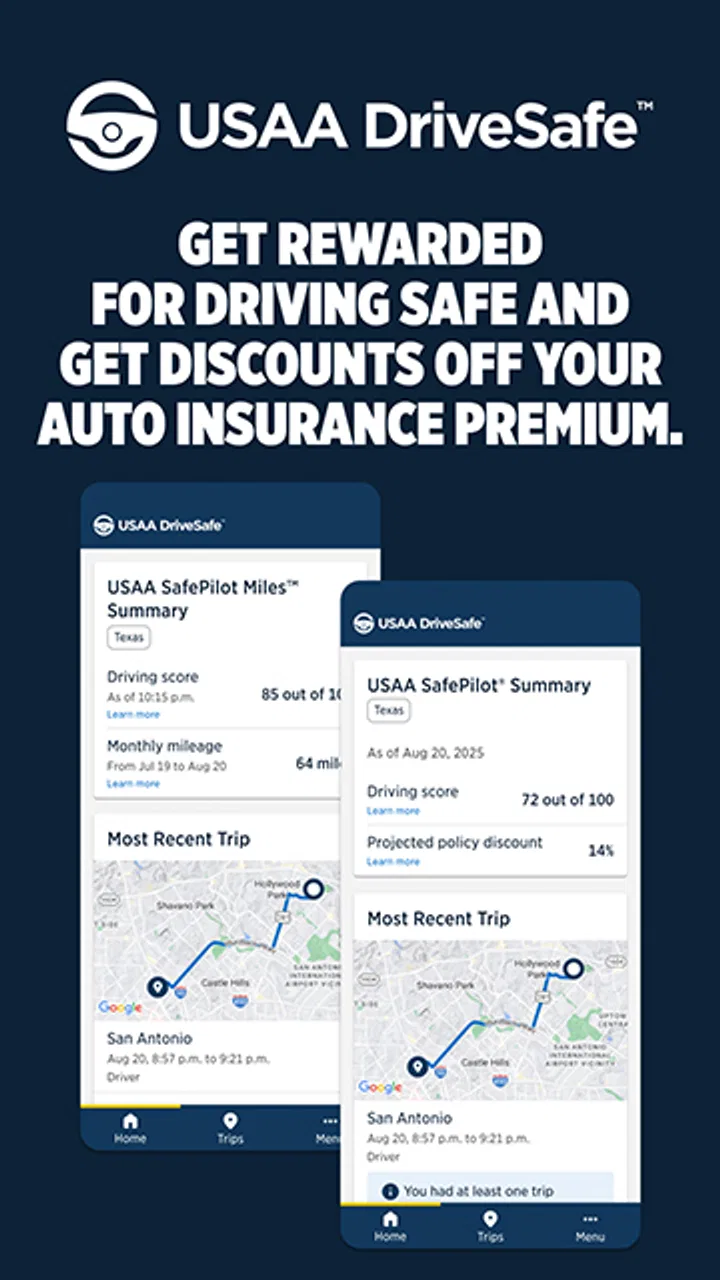
USAA DriveSafe is an app designed to promote safe driving habits by monitoring driving behavior. It uses your smartphone's GPS and sensors to track your speed, acceleration, braking, and phone usage while driving. Users receive feedback and tips to improve their driving skills and reduce risky behaviors, ultimately helping them become safer drivers.
02Is USAA DriveSafe available for both Android and iOS?
Yes, USAA DriveSafe is available for download on both Android and iOS platforms. Users can find it on the Google Play Store for Android devices and the Apple App Store for iOS devices. Ensure your device meets the app’s compatibility requirements before downloading to avoid any technical issues.
03Does USAA DriveSafe track my location at all times?
USAA DriveSafe primarily tracks your location while driving to provide accurate feedback on your driving habits. However, it does not continuously track your location when you're not using the app for driving purposes. Users can adjust location settings and privacy preferences within the app to control how their data is used.
04Can USAA DriveSafe help lower my car insurance premiums?
Participating in the USAA DriveSafe program can potentially lead to discounts on your car insurance premiums. By demonstrating safe driving habits through the app, users may qualify for reduced rates. However, eligibility and discount amounts vary, so it's best to consult with your USAA representative for specific details.
05Are there any costs associated with using USAA DriveSafe?
The USAA DriveSafe app is free to download and use for USAA members. However, it requires a compatible smartphone and may use a significant amount of data, which could incur costs depending on your mobile data plan. It's advisable to check with your service provider to understand any potential data charges.
Pros
- Tracks driving habits accurately
- Offers personalized feedback
- Supports family sharing
- Integrates with USAA insurance
- User-friendly interface
Cons
- Requires continuous GPS access
- Limited to USAA members
- Battery consumption can be high
- No offline mode available
- Occasional app crashes

USAA DriveSafe
Gallery